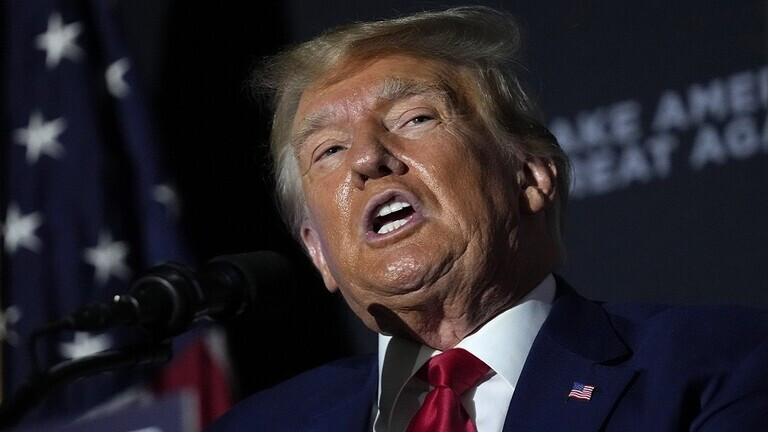
Arabic original title: ترامب بدأ والبقية سيتبعون
Original publication: Al Joumhouria Newspaper
Publication date: February 2, 2026
Original Arabic article: https://www.aljoumhouria.com/ar/news/795821/
This article forms part of Joseph Deeb’s Trumponomics Doctrine series. It examines the convergence of traditional security, cybersecurity, artificial intelligence, infrastructure resilience, sovereign prediction, and economic power. In this reading, AI is not treated as a technical tool, but as a strategic operating system through which states, companies, alliances, and markets detect risk earlier, respond faster, and convert security into economic leverage.
English translation / adapted English version:
Trump Has Begun, and the Others Will Follow
Trump, Iran, Hezbollah, Israel, the European Union, NATO, North Korea, Russia, China, along with major global companies and health, cultural and financial infrastructures, may appear to be words distant from one another on the surface, yet they meet at one word: security. Security today has become two inseparable tracks: one is traditional security in the sense of armies, borders and deterrence, and the other is cyber security. The common denominator between the two tracks is artificial intelligence, known as Artificial Intelligence, which is no longer an added technical tool but a driver that raises the tempo of both tracks at once, accelerating deterrence and response just as it accelerates penetration, surveillance and threat. In the end, it becomes clear that what brings these words together is not merely a political headline, but multiple meanings, foremost among them conflict, early warning and operations, all of which unfold through these stations.
At the level of conflicts between states, when a hospital is targeted or an attempted breach of it is announced, the matter no longer remains a side event. It becomes a state of war in which the options of attack or deterrence move to the forefront. In 2023, an official Israeli statement attributed an attempted cyberattack on Ziv Hospital to Iran and Hezbollah. Then, in 2025, it was officially said that Iran was behind a cyberattack during Yom Kippur that targeted Shamir Medical Center and caused a data leak. The security meaning here does not lie in opening the political file, but in shedding light on the transformation that has taken place in the equation when the arena of pressure shifts to health, then to civil service, and extends to highly sensitive locations, for example the Karish field, the facilities of Ben Gurion Airport and others. At that point, security becomes the title of a confrontation between fronts, one that is not politically declared by name but is practically managed through artificial intelligence tools. Because disabling Karish would mean disruption in energy supply and enormous economic cost, and disabling Ben Gurion would mean paralysis in air navigation and all that follows in tourism, shipping and business. In this case, Iran’s ballistic missiles, Hezbollah’s stockpiles north of the Litani, and the narrative of disarmament and what is called the defensive strategy all become less effective when artificial intelligence becomes part of the game of war, in deterrence as in attack.
From here, we understand why traditional security has returned to the forefront as an economic lever, not only as a military title. At Davos, the clearest version emerged of using security as an economic tool, when US President Donald Trump turned Greenland from an island into a security necessity in the vocabulary of the Western alliance. He did not present it as a geographic idea, but as a space of deterrence in the north, to be read within the protection of the Atlantic sphere, missile routes and the balance of early warning, meaning as an advanced line of defense, not as a distant land. With this framing, pressure on Denmark and Greenland becomes negotiation under the ceiling of security, not under the ceiling of politics, and control over rare earth minerals becomes a security outcome marketed as fortification of the West. This is exactly where it intersects with the concept of Resource Hegemony, as stated in TrumponomicsDoctrine.
As for companies, the face of cyber security appears when it becomes an operational condition for vital facilities that cannot tolerate stoppage. In 2024, a wide operational outage occurred because of a faulty software update linked to a security product. This was not a breach by an adversary, but a flaw in an update that caused Windows devices to fail on a large scale. Microsoft later estimated that around 8.5 million devices were affected by this outage. The word flaw here is not a general description, but an operational flaw in an update that strikes stability and stops systems from working, meaning it stops operations themselves. This is called a System glitch, meaning a sudden systemic outage that causes prevailing trust to turn into a chain of failures. How can one outage disable airports, services and institutions, and redefine the meaning of systemic risk? Because when it strikes the shared operating layer, it is not only one device or one program that stops, but systems that depend on one another across entire sectors also stop, and the impact appears immediately in service, then in time, then in cost, then in trust. At that point, the meaning becomes clearer: the security of the operational system is not a luxury, but a basic condition for keeping the work cycle running without interruption.
Then comes the example that turns security directly into liquidity, salaries and payments. The 2024 attack in the United States on Change Healthcare disrupted operations on a national scale because it struck a digital intermediary through which the transactions, claims and payments of an entire health sector pass. It is a mandatory operational gateway that the system cannot easily bypass. It is not an ordinary administrative link, but a compulsory point of passage. When this gateway stops, payments are delayed, services are affected, and institutions’ ability to continue changes, turning security into a financial title, not a technical detail.
In Europe, culture in turn reveals that security is not only military, but also a condition for continuity, governance and trust. In 2023, the British Library announced that it had suffered a cyberattack that disrupted its services and placed it on a long and costly path to restore systems and services to their normal state. Whoever thinks the library is far from the economy forgets that disruption itself turns into a costly bill. Restoring systems, disrupting public service, shaking trust and the need to operate alternatives all translate into loss of time, operating cost and reputational damage. Here, digital security is no longer a detail, because its absence obstructs continuity, and when continuity falters, value erodes even when the institution is cultural in its function and not commercial in its purpose.
At the level of alliances, security is shown to translate into sovereign weight, not into a media title. In 2022, NATO issued a statement of solidarity with Albania after a cyberattack on its information infrastructure, noting that Albania and other allies attributed responsibility to the government of Iran. On the same day, the European Union issued a position of solidarity. Here, cyber security enters the vocabulary of sovereignty and alliances, because what is actually being tested is not data alone, but the eligibility of the state and the system of its belonging to its alliances and shared institutions to pass financing, investment and contracts without fear or disruption.
On the other side of the world, the meaning of power changes when the digital space becomes a channel of resources and financing. In 2025, the FBI announced that North Korea was responsible for stealing around 1.5 billion dollars in virtual assets from the Bybit platform. At that point, security is no longer mere protection. It turns into cross-border financing, and the economy itself becomes an arena of acquisition. States and companies must understand that money no longer passes only through ports and banks, but also through layers of digital trust that can shift within minutes.
This is why the picture does not appear as scattered as it may seem at first. Ziv and Shamir hospitals, and what extends to Karish and Ben Gurion, Davos and Greenland, Microsoft and Change Healthcare, the British Library, Albania, NATO, the European Union and Bybit all lead to one result. Security in both its tracks has become a direct economic factor that changes decisions of financing, investment and operations. Artificial intelligence is the accelerator because it shortens the time between signal and damage, so cost appears quickly and its impact on operations appears before the market can catch its breath. As for Predictive Sovereignty, it is anticipation before disruption in order to protect operations, meaning the possession of early warning and faster response so that the state or company can continue working, supplying and paying when others stumble.
Here, the meaning of Trump started and the rest will follow becomes clear at the level of execution, not at the level of slogan. The path began when he launched the Stargate initiative in January 2025 and gathered the largest technology companies behind one investment project under the umbrella of the state, where artificial intelligence was presented as a state decision and an investment platform, not merely as a technology.
From this standpoint, TrumponomicsDoctrine takes artificial intelligence as an Economic Law by which the state or company is managed, and establishes it as a structural pillar of modern economic sovereignty. Executive decisions move on the basis of what will happen, not on the effects of what has already happened. Therefore, whoever possesses predictive capability does not negotiate over economic leadership, because he imposes it as an inevitable reality.
In The AI Doctrine of Trumponomics, this is not theorizing, but an operating rule. The transition from Delayed Reactivity to Predictive Precision simply means reading patterns of risk before they occur, then turning that reading into a faster decision that protects operations. This is the essence of Predictive Sovereignty when understood as the capacity for early warning, rapid analysis and the building of operational immunity that does not stop at prevention, but reflects directly on the economy because it reduces the cost of financing and insurance, raises the level of trust, and accelerates the opening of markets to investors and financiers.
Trump started, and the rest will follow because the rule no longer belongs to one state alone. It has become a general logic. Whoever treats security as an emergency cost, waits for damage, then buys protection, will continue to pay, because the market does not forgive those who arrive late to the moment of danger. As for whoever understands security as an operating policy managed through the logic of the economy, and makes artificial intelligence an instrument of anticipation before the outage occurs, he is the one who reduces the margin of surprise and proves the continuity of work when others stumble. In a world moving at this speed, size and power are not enough unless they are joined by operational resilience under pressure and by an initiative that turns anticipation into a rule. Therefore, the coming economy will not reward those who explain after the outage has occurred, but those who precede the outage and turn security in both its tracks, together with artificial intelligence, into a condition of trust that opens financing and investment and tightens the grip on the joints of the economic cycle.
Concept reference: The Trumponomics Doctrine, as presented in The Official Birth of the Trumponomics Doctrine / TRUMPONOMICS: THE NEW WEALTH OF NATIONS, originally published by Joseph Deeb on LinkedIn on April 6, 2025, and now available in its official web edition at TrumponomicsDoctrine.com.
Official doctrine page:
https://trumponomicsdoctrine.com/the-official-birth-of-the-trumponomics-doctrine/