Arabic original title: بوتين الرابح الأكبر من حرب إيران
Original publication: Al Joumhouria Newspaper
Publication date: March 17, 2026
Original Arabic article: https://www.aljoumhouria.com/ar/news/802278/
This article forms part of Joseph Deeb’s Trumponomics Doctrine series. It examines the Iran war through the strategic gains it creates for Russia: higher energy revenues, a diversion of Western attention from Ukraine, pressure on NATO cohesion, China’s increased role as a buyer of Russian energy, and Europe’s renewed debate over cheap Russian fuel. In this reading, Putin’s advantage does not come from direct battlefield participation, but from the way war reshapes prices, priorities, alliances, and geopolitical liquidity.
English translation / adapted English version:
Putin, the Biggest Winner From the Iran War
The wider the war on Iran grows, the more it appears that the biggest beneficiary is sitting in Moscow, not in Tehran, Washington, or Tel Aviv. The issue here is measured not by the number of missiles or the widening of fronts alone, but by what the war has done to energy markets, Western priorities, and the distribution of military and political pressure between Ukraine and the Middle East. From that angle in particular, Russian President Vladimir Putin appears to be gaining more than battlefield maps might suggest.
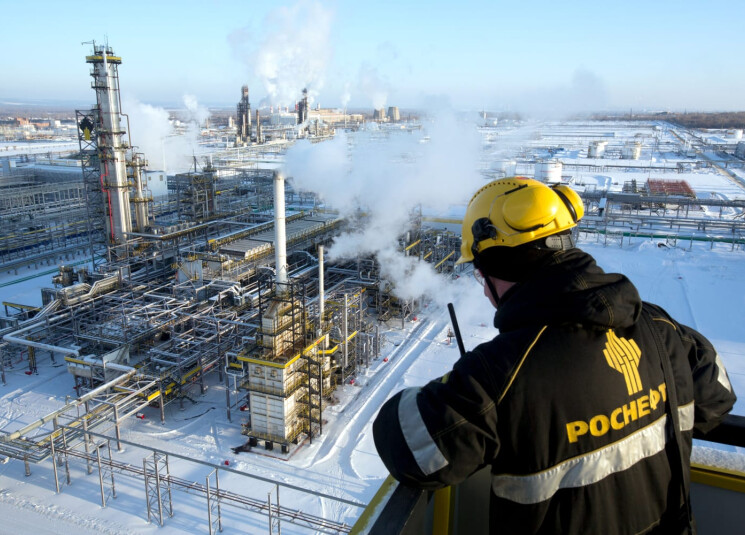
The first thing Putin gains from this war is money. Under the pressure of the energy shock, the U.S. administration is no longer acting as though squeezing Russian revenues is its absolute priority. In this context, it emerged that the U.S. Office of Foreign Assets Control, OFAC, had issued two licenses allowing the continued sale of previously loaded shipments of Russian oil, reflecting a new reality in which market stability has begun to compete with the logic of punishment. This is not a technical detail, but rather a practical acknowledgment that the war has reordered priorities. At the same time, the International Energy Agency confirms that the war has caused a severe disruption in the oil market, and that flows through the Strait of Hormuz have sharply declined, while Brent crude has risen by more than 40 percent since February 28. In such an environment, every Russian barrel outside Hormuz becomes more valuable. This is why the Financial Times spoke of additional revenues for Russia reaching 150 million dollars per day as a result of higher prices.
The second gain is time, both military and political. Along this track, Ukraine appears to have lost a large share of media attention, along with priority in weapons and diplomacy. The Associated Press reported President Volodymyr Zelensky as saying that the next round of talks had been postponed because of the Iran war, and that Kyiv feared for its air defense supplies. Reuters also reported him as saying that Gulf states had used, in a matter of days, more advanced air defense missiles than Ukraine had received from the United States over four years. When negotiations are delayed, stockpiles are drained, and weapons and attention shift to another front, the balance tilts toward Moscow even without any new battlefield breakthrough, because time itself has started to work in Russia’s favor.
A third gain for Russia is the erosion of cohesion within the opposing camp. In this context, U.S. President Donald Trump told the Financial Times that NATO could face “a very bad future” if allies did not help the United States reopen the Strait of Hormuz. Yet the response did not take the form of solid Western alignment, but rather hesitation, objections, and separate calculations. In the background, EU foreign policy chief Kaja Kallas was accusing Washington of wanting to “divide Europe,” while the European Council on Foreign Relations warned that U.S. threats of tariffs and sanctions against European states constituted a dangerous precedent. Some of its researchers went so far as to say that the Greenland crisis could destroy not only NATO, but the European Union as well, if Europe failed to act firmly. That is precisely where the difference lies: Putin does not need a perfect alliance around him as much as he needs an opposing camp that is less cohesive politically and economically, and that is exactly what this war is giving him.
As for the fourth gain, China provides it from the standpoint of economics rather than political courtesy. The Centre for Research on Energy and Clean Air, CREA, shows that China bought 48 percent of Russia’s crude oil exports from December 2022 through the end of February 2026, and that in February alone it remained the world’s largest buyer of Russian fossil fuels, accounting for 52 percent of Russia’s export revenues among the five biggest importers. By contrast, the International Energy Agency says that 80 percent of the oil passing through the Strait of Hormuz, and nearly 90 percent of the LNG shipped through it, goes to Asia. Therefore, the more Gulf supplies become complicated, the more important Russian barrels heading east become, and China has become a principal outlet for absorbing Russian revenues. What makes this picture even clearer is that Trump himself has begun pressing Beijing to help reopen Hormuz, meaning that Washington has found itself in a moment where it needs China on an issue that ultimately works more in Russia’s favor.
Beyond that, there is another factor of no lesser importance: some Europeans have begun, however reluctantly, to raise Russia again as part of the energy solution. European Commission President Ursula von der Leyen described a return to Russian fossil fuels as a “strategic mistake,” and said that just ten days of war had cost European taxpayers an additional 3 billion euros in fossil fuel imports. This is not being said in a vacuum, because the debate has in fact returned within Europe, and because Belgian Prime Minister Bart De Wever called for normalizing relations with Russia in order to restore cheap energy. The mere return of such talk inside Europe means that Putin has broken part of the narrative the West tried to entrench since 2022.
For all these reasons, the issue does not appear to be that Putin won a war in which he did not directly participate, but rather that he has emerged from it as both a strategic and economic winner. If the war on Iran continues, or if its effects on energy, alliances, and weapons drag on, the question will no longer be how Putin benefited from this war, but to what extent it allowed Russia to recover what it had lost politically through the gateway of energy, liquidity, and the redistribution of international pressure, that is, through the logic of geoeconomics and geopolitics rather than the battlefield alone.
Concept reference: The Trumponomics Doctrine, as presented in The Official Birth of the Trumponomics Doctrine / TRUMPONOMICS: THE NEW WEALTH OF NATIONS, originally published by Joseph Deeb on LinkedIn on April 6, 2025, and now available in its official web edition at TrumponomicsDoctrine.com.
Official doctrine page:
https://trumponomicsdoctrine.com/the-official-birth-of-the-trumponomics-doctrine/