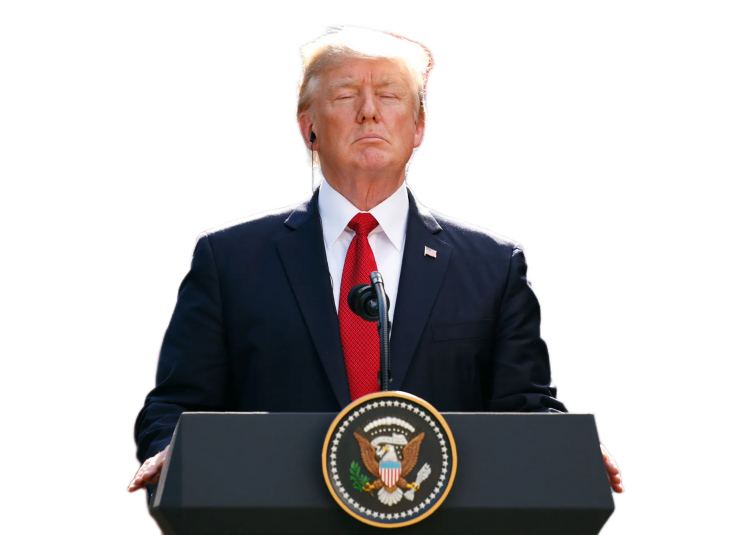
Arabic original title: التحالفات العالمية بعد “الترامبونوميكس” حين لا تكفي الصداقة لحماية الحليف
Original publication: Al Joumhouria Newspaper
Publication date: June 15, 2026
Original Arabic article: https://www.aljoumhouria.com/ar/news/815710/
This article forms part of Joseph Deeb’s Trumponomics Doctrine series. It moves from Europe’s economic capacity and Trump’s logic of subjugation to the transformation of alliances themselves in the post-Trumponomics era. It examines how protection, friendship, military dependence, market access, industrial capacity, strategic geography, and resource leverage are no longer treated as fixed guarantees, but as negotiable instruments inside a wider doctrine of sovereign leverage.
English translation / adapted English version:
Global Alliances in The Post-Trumponomics Era: When Friendship Is Not Enough to Protect an Ally
After the previous article approached Europe from the economic angle, this second part of the Trumponomics Doctrine series moves to another question: what remains of the traditional meaning of alliance when protection itself becomes a language from a previous era? After Trumponomics, the world discovers that the stronger ally can remain inside the alliance while changing its meaning at the same time, when it moves the security guarantee from the language of trust to the language of interest-based calculations, and turns what the other side needs into a bargaining card.
Protection as a New Test for Alliances
From Japan and South Korea, where trade becomes entangled with the cost of American forces, to Australia, where submarines turn into a relationship of industrial dependency that touches sovereignty, and then to Germany and Poland, where the military map becomes movable between withdrawal, delay, and deployment, protection appears as a new test for alliances. In this sense, alliances seem to have changed from within, without collapsing, because friendship itself has become conditioned by what each side possesses, what it can withhold, or what price it can demand, even from an ally. More importantly, the language of Trumponomics has left Washington and moved to rivals and allies who use the same rule with different tools.
The Trade Bill
The Trumponomics syndrome begins with Japan and South Korea, from inside the alliance rather than outside it, as they are among the allies most closely attached to the American umbrella in Asia. Tokyo and Seoul wanted to keep trade on one track, where tariffs, markets, cars, chips, and trade deficits are discussed, and the cost of American forces on another track, where bases, deterrence, and regional threats are discussed. Washington, however, placed the two files on the same table, and the cost of the American soldier entered alongside customs duties, export volumes, and market conditions, as if protection itself had become part of the trade bill. Here, the problem becomes deeper than how much Tokyo or Seoul pay, because the American military presence becomes a number open to bargaining, and the ally discovers that its need for the security umbrella gives the side that owns it the upper hand in negotiation.
Iran Picks Up the Same Rule
From the position of an adversary, Iran picks up the same rule with a different tool. Tehran does not use customs tariffs or an overseas military base, but it applies the same rule, namely turning what the other side needs into a bargaining card. The Strait of Hormuz, in this sense, has become an Iranian tool for applying Resource Hegemony through the passage, not through ownership, because whoever can threaten the movement of oil and shipping can raise the cost of agreement and the cost of no agreement at the same time.
In Australia, Trumponomics takes another path through the gateway of AUKUS, where Canberra’s retreat from the French submarine contract, after years of negotiation and commitment, became a test inside the alliances themselves, because it opened the way for a U.S.-British agreement that gives Australia a path toward nuclear submarines. On the surface, the matter appears to be a move toward a more advanced option, but what broke along the way went beyond the French contract itself and opened a more sensitive question inside Western alliances: what happens when the larger ally pressures one ally to leave an existing commitment with another ally, and then enter into a longer, more expensive, and more dependent commitment tied to Washington and London’s industrial and military interests and political priorities? At that point, AUKUS becomes more than a submarine deal, because it places Australia between the security label used to justify the deal, namely Economic Narrative Warfare, and its need for Washington, after it appeared that American pressure pushed it to renounce its French commitment, damaging the relationship between two Western allies inside an alliance that is supposed to protect allies rather than push one of them to break its commitment toward the other.
China Applies Resource Hegemony in Its Industrial Form
And who other than great China would pick up the intricacies of the Trumponomics Doctrine and apply them with its own tool? After AUKUS, the rule moves from the defense capability that Australia does not possess to the resources the West cannot do without. China here applies Resource Hegemony in its industrial form, because the issue is not only owning the mineral, but owning its processing, its supply chains, and the ability to insert it into or remove it from the calculations of Western industry. Just as Australia revealed the cost of dependence on the industrial capability of an ally, China reveals the cost of dependence on a resource for which the West has no quick alternative.
The European Ally Faces a Different Reality
In Europe, the effects of Trumponomics appear through Germany and Poland, where the number of American troops itself seemed capable of being raised or lowered according to the required political message. When five thousand troops are withdrawn from Germany after political tension with Berlin, then a batch of four thousand troops that had been heading to Poland is suspended or canceled, before talk later returns about sending five thousand additional troops to Warsaw, the European ally faces a different reality: protection has come to mean Washington’s ability to move the number up and down, as a signal, as a punishment, or as reassurance. Here, the military map turns from defensive deployment into a bargaining tool inside the alliance, where the side that can withdraw from one place, delay in another, and send to a third holds the upper hand in negotiation even before the official discussion begins.
From this precise point, Europe begins to learn the lesson from the position of an ally, not an adversary. If Germany and Poland reveal how Washington can move military protection between withdrawal, delay, and deployment, then Europe’s recent attempt to build a broader defense industry and clearer strategic autonomy is a direct response to the logic of Trumponomics itself.
The conclusion is that Trumponomics changes the meaning of alliance from within, without needing to destroy it from the outside. When troops become subject to withdrawal and delay, submarines become tied to an industrial cycle that feeds the economy of the stronger ally and enters its internal calculations, and the passage and the mineral become part of a state’s ability to exert pressure, the alliance shifts from a reassuring promise among friends into a power relationship in which each side knows what it owns and what the other side needs. For this reason, the world after Trumponomics does not necessarily appear less allied, but it is less willing to believe in the alliance as it used to be narrated. At this point, friendship is not enough to protect the ally that has nothing to bargain with, because the protection it once thought was a guarantee may itself become the subject of negotiation.
Concept reference: The Trumponomics Doctrine, as presented in The Official Birth of the Trumponomics Doctrine / TRUMPONOMICS: THE NEW WEALTH OF NATIONS, originally published by Joseph Deeb on LinkedIn on April 6, 2025, and now available in its official web edition at TrumponomicsDoctrine.com.
Official doctrine page:
https://trumponomicsdoctrine.com/the-official-birth-of-the-trumponomics-doctrine/