Arabic original title: نموذج مجلس التعاون الخليجي بعد الحرب
Original publication: Al Joumhouria Newspaper
Publication date: March 25, 2026
Original Arabic article: https://www.aljoumhouria.com/ar/news/803695
This article examines the Gulf Cooperation Council after the Iran war as a test of regional resilience, infrastructure continuity, energy security, financial stability, water security, and AI sovereignty. It argues that Gulf power can no longer be measured only through oil, gas, or capital, but through the ability of states to keep electricity, water, ports, finance, cloud infrastructure, communications, and predictive governance functioning under pressure.
English translation / adapted English version:
The GCC Model After the War
Over the past decade, the Gulf has sought to present itself to the world as more than merely an energy reservoir. The wager is no longer confined to exporting oil and gas; it has shifted toward building a broader operating system that brings together energy, ports, finance, communications, Cloud, and an advanced trajectory in artificial intelligence, with computing tied at once to electricity, cables, capital, and regulatory policies. With the outbreak of war, that vision did not collapse all at once, but it entered a harsher phase.
That became even clearer with what Reuters reported the day before yesterday about U.S. President Donald Trump’s decision to postpone strikes on Iranian power stations and energy infrastructure for five days after speaking of “good and productive” talks, because that postponement showed that the test was no longer confined to military deterrence, but had extended to the cost of disrupting the networks on which the functioning of the entire region depends. At that point, the real benchmark emerged in a state’s ability to safeguard the operating environment on which these projects rest and keep it viable, because investors, financiers, and technology partners test the Gulf at the first serious tremor and watch its ability to keep that environment cohesive when tension spreads to its essential facilities.
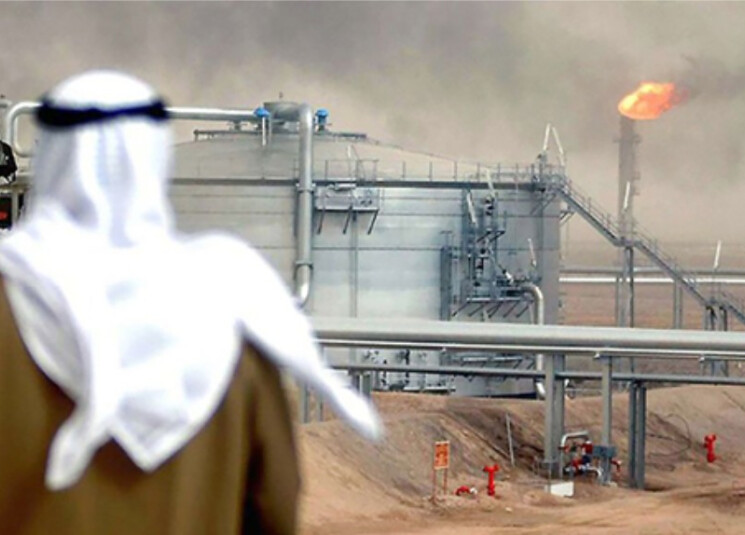
From here, the current crisis cannot be reduced to a new oil shock, because the Strait of Hormuz, for all its importance, is only the most exposed point in a wider system. In that context, the International Energy Agency explained that the war had produced the largest disruption in oil supplies in the history of the global market, and noted that flows through Hormuz had fallen from around 20 million barrels per day to sharply lower levels, while also reminding readers that the available alternatives for bypassing the strait remain limited, since only Saudi Arabia and the UAE possess operational pipelines capable of partially bypassing Hormuz, and even then the spare capacity of those routes remains far below the original volume of flow. At that point, it becomes clear that any region seeking to entrench itself as a center for advanced industry, digital services, and cloud capacity cannot treat energy continuity as a mere technical detail in the background, because that continuity is part of the very core of the value proposition it offers the world.
When we move to the financial dimension, the discussion requires a greater degree of discipline. Standard & Poor’s estimated that Gulf banks could face local withdrawal flows of up to $307 billion in an extremely adverse scenario, but also pointed out that the sector remains able to withstand the shock thanks to the large liquidity it holds and its balances with central banks. This dual conclusion reminds us that the financial system may remain liquid and capable of absorbing the shock, yet still emerge from the experience with a higher cost of funding, steeper risk premiums, more cautious lending, and more selective foreign capital. The issue, therefore, concerns how the cost of dealing with the region is reassessed in market calculations, because trust in wartime is continually rewritten according to a state’s ability to persuade others that disruption will not harden into a permanent condition.
Any serious reading of the Gulf’s ability to preserve the regular functioning of its system remains incomplete if water is left at the margins, because desalination is a condition of urban and economic continuity. The Bulletin of the Atomic Scientists warned that desalination plants had entered the theater of war, reminding readers that GCC states host the world’s largest desalination plants and that those plants supply roughly 90% of drinking water in Kuwait and Oman, and around 70% in Saudi Arabia. Here, a city that wants to host data centers, AI projects, and advanced industries needs stability in water and energy to the same degree that it needs digital infrastructure. Any serious technological ambition therefore requires bringing the regular provision of water and electricity into the heart of the calculation, because their stability forms part of the credibility of that ambition and of its ability to endure under pressure.
From here, artificial intelligence no longer stands as a separate layer above this infrastructure, because talk of data centers, computing, and digital sovereignty loses much of its meaning if electricity, water, and communications remain outside the center of the calculation. At this precise point, the modern literature on AI sovereignty becomes more useful than the usual promotional rhetoric, as Brookings, Chatham House, and the Middle East Institute converge on one conclusion: this field is tied to a state’s ability to build the conditions that allow technology to operate and to be protected under pressure.
Here, The AI Doctrine of Trumponomics appears within the intellectual framework I established in Trumponomics Doctrine, where I treated artificial intelligence as a tool for managing the economy and governance at the level of Predictive Sovereignty, that is, through absorbing external shocks before they cascade, and through forecast velocity, which rewrites the rules of the economy before traditional policies can catch up. The challenge facing GCC states, then, lies in building these capabilities and employing them as tools of anticipatory governance and of protecting economic stability when they are put to the test.
Accordingly, the state that succeeds in keeping its essential facilities running in wartime offers the world, alongside oil and gas, a real capacity to endure when tested. In the end, the decisive criterion remains who can prove, in practice and not in slogans, that the strength of each GCC state is measured by its ability to keep its system functioning in wartime, reflecting a practice of governance, institutional discipline, and strategic anticipation.
Series reference: This article appears within Joseph Deeb’s wider Trumponomics Doctrine Series & Global Geopolitics / Geoeconomics writings, where Gulf resilience is examined through energy, water, infrastructure, finance, AI sovereignty, predictive governance, and strategic shock absorption.
Official doctrine page: