Arabic original title: طرابلس الفيحاء تواجه البترون!
Original publication: Al Joumhouria Newspaper
Publication date: February 23, 2026
Original Arabic article: https://www.aljoumhouria.com/ar/news/798028/
This article examines Tripoli’s Mina initiative as a local economic intervention rather than a passing Ramadan event. It compares Tripoli’s attempt to activate its streets, markets, cafés, crafts, services, and visitor flows with Batroun’s successful seasonal model, arguing that cities can create economic momentum when public action turns events into confidence, branding, spending, and repeated foot traffic.
English translation / adapted English version:
Tripoli Faces Off Against Batroun!
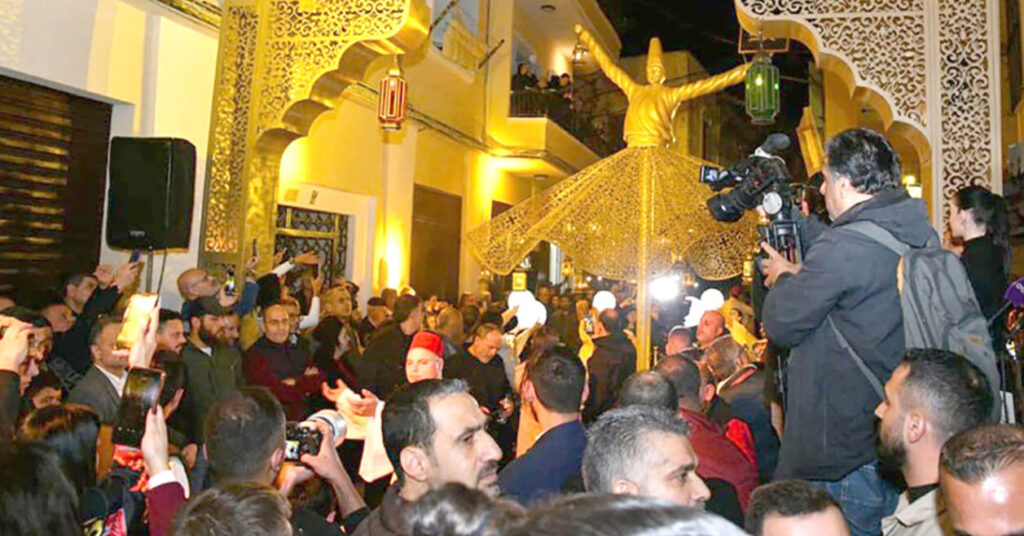
Mina, Tripoli, succeeded on Friday night and emerged as a promising model. During the MINOT (Mino) events, the Ramadan evening was not a passing occasion, but a direct and proactive economic intervention in a city wearied by stagnation. What the Municipality of Mina did was reactivate the city’s markets within the atmosphere of the blessed month of Ramadan.
But what does that mean in clear terms?
When markets move, the economic cycle is activated. A vendor sells, an artisan introduces people to his product, a café becomes crowded, deliveries increase, taxis operate, and organization, security and cleaning services are paid. This is the economy when it descends from theories to the pavements. This is also what the Municipality of Batroun mastered when it presented a successful model through which it established itself as the capital of Christmas, locally and internationally.
Batroun, which has ascended the throne of seasonal events, learned well that the first currency of any local economy is the flow of people, not the decorations. When passageways and streets become crowded, what we call rapid spending begins. This form of spending requires neither a major investment decision nor loans, but merely a moment of confidence.
What happened at Mino was not merely the sale of goods, but the creation of renewed confidence in the city of Mina. It is hoped that this confidence will later translate into repeated visits, then a reputation, and finally a spending habit. The people of Tripoli will most likely know how to read economic action when they see it, because what was offered to them in terms of activating the local economy has rarely been offered in this manner.
Here, Batroun’s skill becomes evident, as it harnessed seasonal events to accumulate points in the economy. What stands out in its experience is its breaking of the psychological and political lines that have traditionally confined cities. Many people in Lebanon treat regions as though they were closed islands, but Batroun, in particular, does not understand this language. Friday night marked the launch of the idea of transferring the model for organizing seasonal events from one place to another, and Mina seized the idea and applied it intelligently. We are speaking here about transferring an operating technique, not transferring a celebration.
This is, in itself, a display of economic skill. Mina created a foothold for itself because, through this approach, it entered a space that cities are not accustomed to entering in such an operational manner. It is precisely here that the gap appears between those who transform a season into an economic cycle and those who content themselves with reacting, waiting and recording positions.
The Batroun experience is a clear example of the seasonal economy. When a city becomes a regular stage for events, the profit is distributed throughout the entire city, from the municipality to shops, rentals, services and the workforce, while the city gains an additional value known as a brand. A brand means that a place becomes marketable and sellable, and becomes a destination to which people can return year after year, time after time, because they return to it as a destination, not by coincidence.
What is happening in Tripoli today is an attempt to replicate the logic of a Ramadan brand, following the example of Batroun’s Christmas brand. This means creating an economic Ramadan season that moves the holy month away from silent consumption inside homes and towards activity in the streets and a cycle of spending that benefits the people.
The conclusion of the comparison is simple. Recording what has been achieved on the ground remains incomplete unless it is translated into operational results that people can feel and that set local economies in motion. In Tripoli, as in the Batroun model, every successful event means additional opportunities for dozens of families and confirms that the economy does not wait for budgets or speeches before it begins to move.
The question that imposes itself after this success, in a country where political division colours every initiative before it is evaluated economically, is this. Why does politics in Lebanon not become a race for results instead of a race to score points? If Tripoli can rise through a single season, why do Lebanon’s decision-makers content themselves with becoming accustomed to stagnation? And if one night is capable of setting all of this in motion, then the time has come for us to visit Tripoli, shop in its markets and allow our spending there to say the rest. Participation here is not a courtesy, but an economic act and part of keeping the city operating.
The economy shows no mercy to spectators and does not reward those who content themselves with words.
Publication reference:
This article appears within the wider Publications section, under Lebanon, Economy & Public Sector Reform, where local economic activation, city branding, seasonal economies, municipal initiative, market movement, tourism, and urban recovery are examined through economic and governance analysis.
Official doctrine page: The Official Birth of the Trumponomics Doctrine